Foundations of LLMs
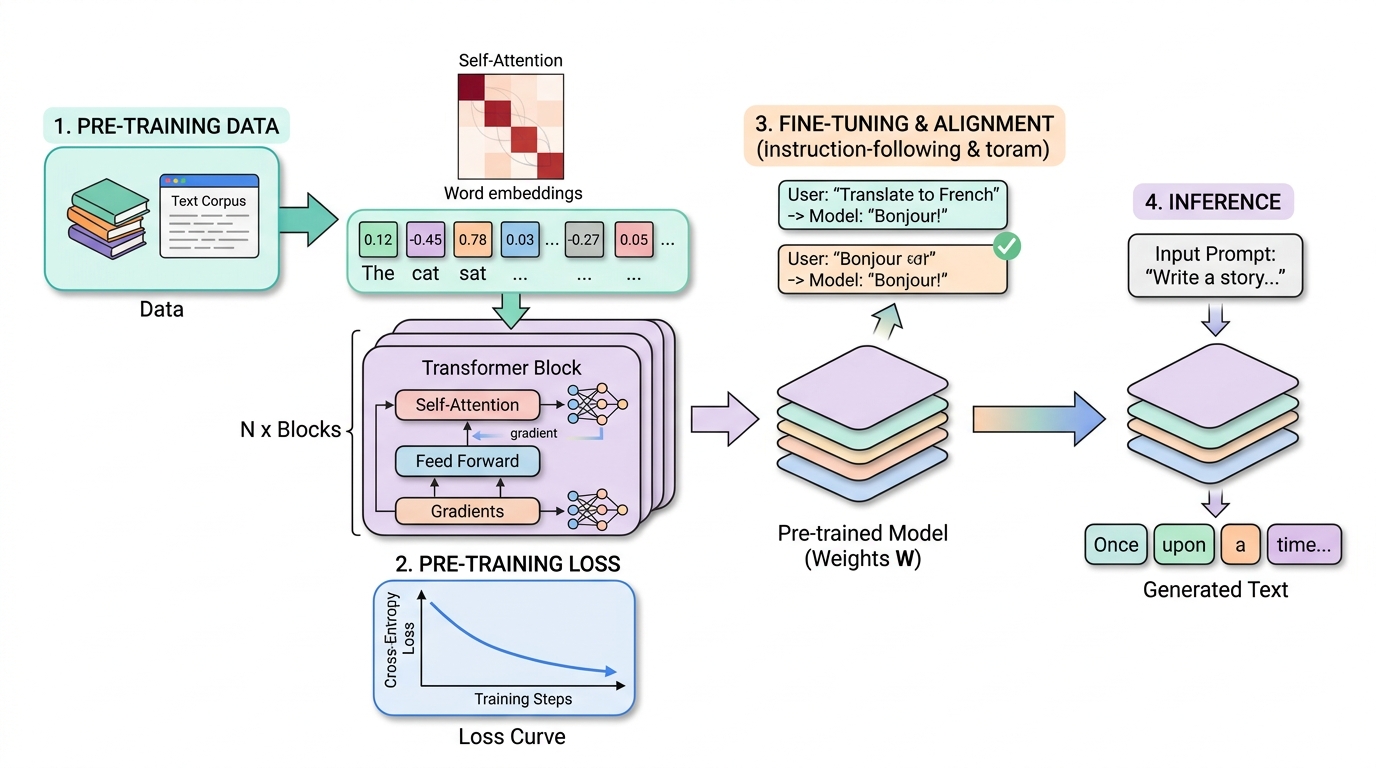
An introduction to the course, covering the basics of LLM mechanics, scaling laws, and the concept of next-token prediction.
Core Topics
- LLM Evolution
- Scaling Laws
- Emergent Properties
- Next-Token Prediction
Resources & Assignments
A deep-dive technical journey into the architecture, mechanics, and implementation of Large Language Models, from tokenization to the transformer attention mechanism.
View course on VizuaraThis course provides a robust foundation in constructing LLMs from the ground up. Students will explore the historical evolution of models, understand the mechanics of token prediction, and implement core components like Byte Pair Encoding and attention mechanisms.
Through a blend of theoretical lectures and hands-on Google Colab exercises, learners will gain practical experience in building and interpreting the neural architectures that power modern generative AI.
By the end of this course, students will be able to:
An introduction to the course, covering the basics of LLM mechanics, scaling laws, and the concept of next-token prediction.
Core Topics
Resources & Assignments
Deep dive into how text is converted into numerical data, focusing on word-based tokenization and Byte Pair Encoding (BPE).
Core Topics
Resources & Assignments
Learning how to prepare data for training, including creating input-target pairs and implementing token embeddings.
Core Topics
Resources & Assignments
Understanding the necessity of positional information in transformer models and how to implement positional encodings.
Core Topics
Resources & Assignments
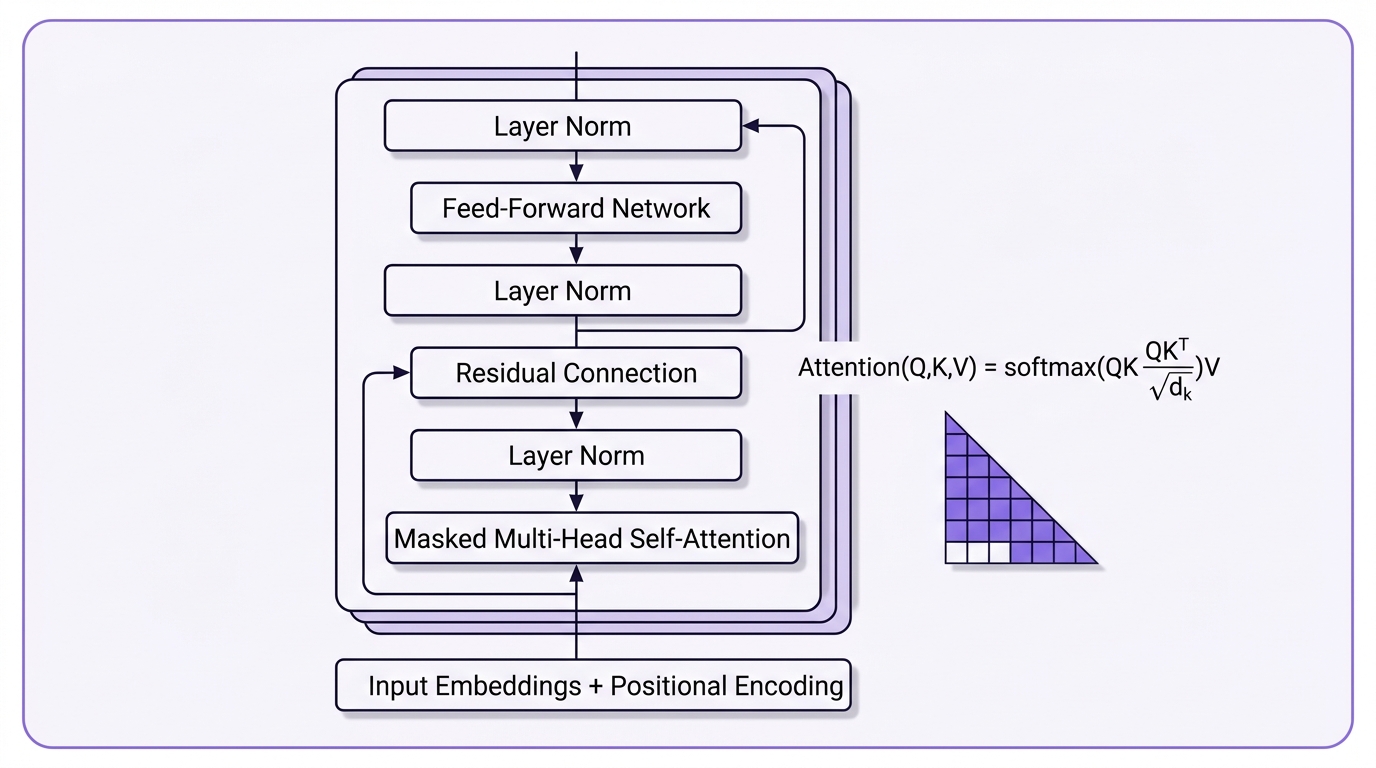
Exploring the core of the transformer architecture: self-attention and multi-head attention.
Core Topics
Resources & Assignments
Build and test a custom word-based tokenizer and BPE implementation.
Implement self-attention from scratch using NumPy/PyTorch in a Colab notebook.
A final project demonstrating the integration of tokenization, embedding, and attention modules to form a basic LLM pipeline.