Build a Diffusion Language Model from Scratch thumbnail 1
Build a Diffusion Language Model from Scratch thumbnail 2
Build a Diffusion Language Model from Scratch

Build a Diffusion Language Model from Scratch

Master the architecture of diffusion language models by building a discrete denoising transformer from the ground up, exploring unmasking strategies and probabilistic text generation.

View course on Vizuara
InstructorVizuara Expert Team
FormatProject-Based Learning
Sessions8 Modules
AudienceML Engineers & NLP Enthusiasts
Course Description

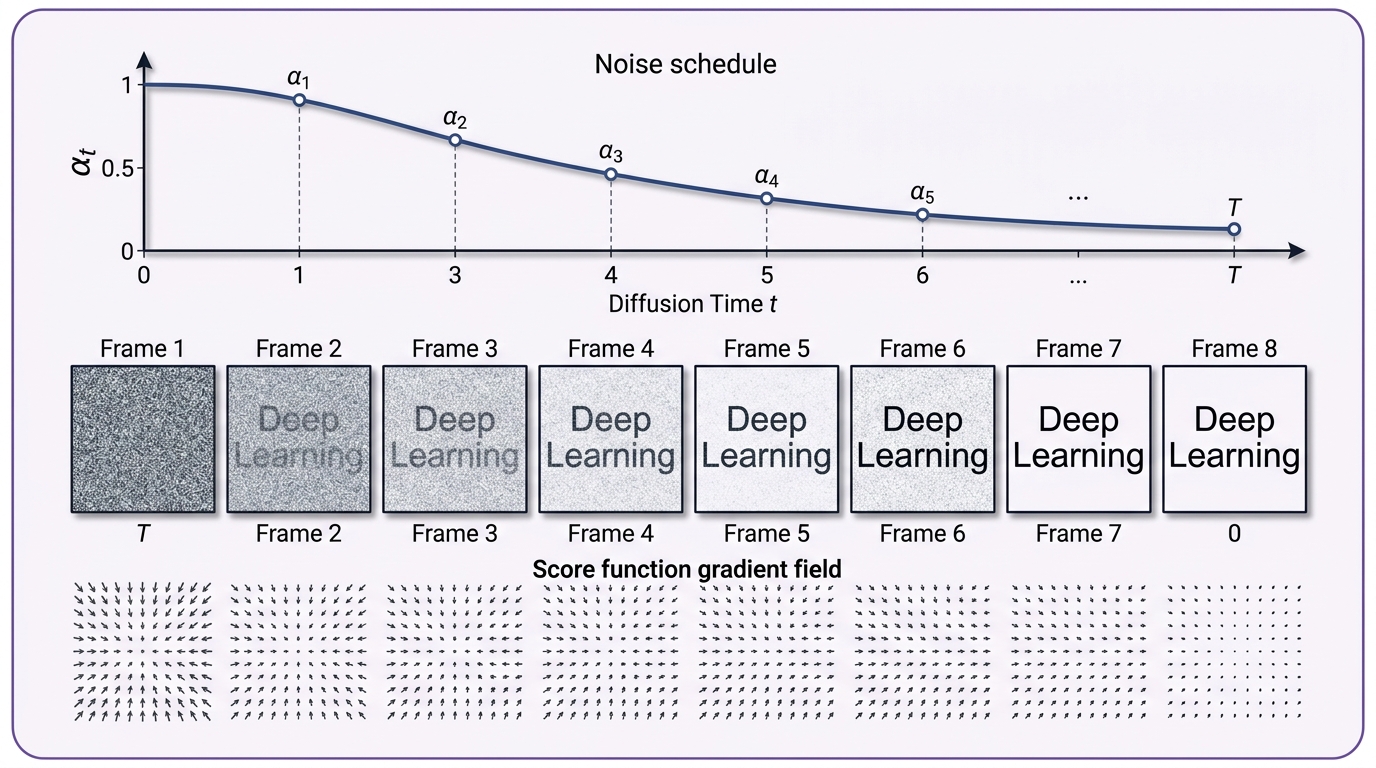
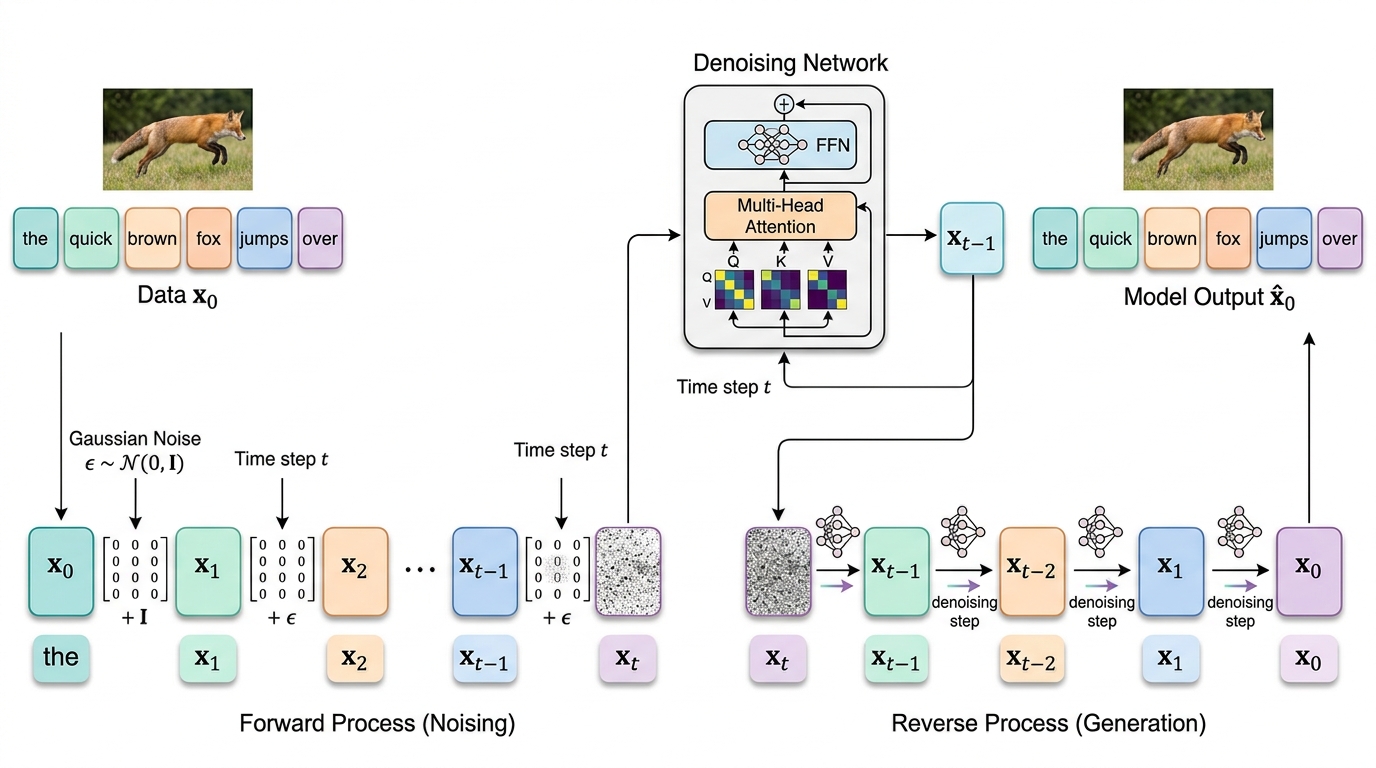
This course offers a comprehensive exploration into the cutting-edge field of diffusion language models. You will move beyond traditional autoregressive architectures to understand how iterative denoising processes can generate coherent text.

Through hands-on coding in Google Colab, you will implement a discrete diffusion language model from scratch, train it on the TinyStories dataset, and visualize the inference process.

Learning Outcomes

By the end of this course, you will be able to:

Prerequisites
Course Sessions
Module
01

Foundations of Diffusion LMs

Introduction to the core concepts of diffusion-based language modeling and how they differ from standard autoregressive approaches.

Focus on the shift from left-to-right generation to parallel denoising.

Core Topics

  • Autoregressive vs. Diffusion
  • Denoising processes
  • Unmasking strategies

Hands-On Resources

SlidesLecture Video
Module
02

Mathematical Underpinnings

Deep dive into the matrix and vector operations required to structure and process data through diffusion model stages.

Visual walkthroughs provided via Miro boards.

Core Topics

  • Matrix operations
  • Vector embeddings
  • Probabilistic modeling

Hands-On Resources

Miro BoardsLecture Notes
Module
03

Building the Transformer Backbone

Setting up the architecture for a discrete diffusion language model from scratch.

Initial implementation of the model structure.

Core Topics

  • Transformer architecture
  • Random initialization
  • Embedding layers

Hands-On Resources

CodeColab
Module
04

Training on TinyStories

Training the model on a subset of the TinyStories dataset to learn simple narrative structures.

Configuring run modes for quick testing vs. full training.

Core Topics

  • Dataset preparation
  • Training loops
  • Loss functions

Hands-On Resources

ColabDataset
Module
05

Inference and Denoising

Implementing the iterative denoising process to generate text from masked sequences.

Focus on the 'editing into existence' effect.

Core Topics

  • Iterative denoising
  • Masking strategies
  • Inference optimization

Hands-On Resources

ColabCode
Module
06

Visualization and Analysis

Visualizing the model's progress as it denoises text, creating inference GIFs.

Analyzing the model's internal state during generation.

Core Topics

  • Inference visualization
  • Terminal-style output
  • Performance analysis

Hands-On Resources

ColabProject
Module
07

Advanced Research Directions

Exploring potential research areas and practical applications for diffusion-based language models.

Reviewing current literature and open problems.

Core Topics

  • Research papers
  • Future applications
  • Scaling laws

Hands-On Resources

PapersDrive Links
Module
08

Final Project Showcase

Consolidating the implementation into a final project and reviewing key takeaways.

Final review of the diffusion pipeline.

Core Topics

  • Project review
  • Course summary

Hands-On Resources

Project
Assessments

Model Implementation

Successfully train a discrete diffusion language model on the TinyStories dataset.

Inference Visualization

Generate and export a terminal-style inference GIF demonstrating the denoising process.

Research Brief

Identify and document a potential research area for improving diffusion-based language models.